

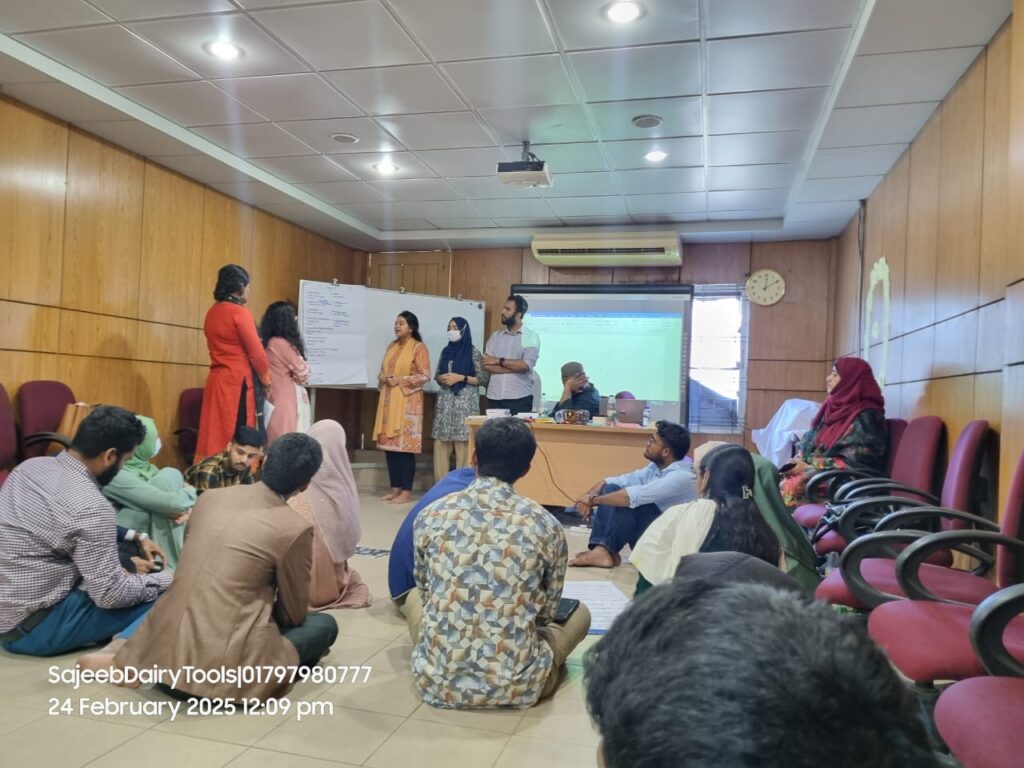
Survey for Characterizing the Veterinary Antibiotic Market in the Poultry Sector
The “Survey for Characterizing the Veterinary Antibiotic Market in the Poultry Sector” was a valuable and well-organized training program funded and launched by the Food and Agriculture Organization (FAO) of the United Nations. The program was held on 11–12 March 2025 at the Chattogram Veterinary and Animal Sciences University (CVASU) campus, and it was hosted by the university in collaboration with FAO. A total of 20 veterinarians from across Bangladesh were selected to participate in this specialized training, making it a highly focused and impactful program aimed at strengthening the responsible use of antibiotics in the poultry sector. I was honored to be one of the selected participants, representing my region alongside professionals from different districts. My team member during the training was Oishi from Bangladesh Agricultural University (BAU), Mymensingh, and together we collaborated on different group activities and field discussions. The training lasted for two days, during which all participants stayed on the CVASU campus. The university provided comfortable accommodation, a collaborative learning environment, and opportunities to interact with experts and fellow veterinarians. Our main trainer was Professor Dr. Redwan Pasha, a respected academic from CVASU known for his expertise in veterinary public health and antimicrobial resistance. Along with him, several trainers and specialists from FAO conducted sessions, delivered lectures, and guided practical exercises. Their insights on global and national antibiotic usage, regulatory frameworks, surveillance systems, and market dynamics were extremely valuable. Their teaching approach was interactive, clear, and supported by real case studies, making the sessions easy to follow and deeply meaningful. Throughout the training, we explored how antibiotics are used across the poultry industry—from hatcheries and broiler farms to feed mills and drug sellers. We learned about the commonly used antibiotic groups, patterns of purchase and distribution, and the challenges farmers face in managing disease without overusing drugs. A major focus was the growing global concern regarding antimicrobial resistance (AMR) and the importance of responsible antibiotic usage to protect both animal and human health. The program also highlighted practical field-level skills. We were trained on how to conduct structured surveys, identify gaps in antibiotic knowledge, evaluate drug-selling practices, and monitor supply chains. Hands-on exercises taught us how to collect high-quality field data that truly represent the real market situation. We also performed mock interviews, group surveys, and problem-solving sessions that strengthened our communication and field research skills. Staying at CVASU for two days allowed us to experience the university’s academic environment, interact with teachers and students, and visit some of its modern facilities. The campus atmosphere was refreshing, and the interaction among participants created a feeling of teamwork and shared purpose. We also enjoyed the hospitality, good food, and the energetic learning environment throughout the training. Overall, the FAO-funded program was not only informative but also inspiring. It broadened my understanding of antibiotic usage patterns in the poultry industry and strengthened my commitment to promoting safe, evidence-based veterinary practices. Meeting veterinarians from different regions, sharing field experiences, and learning from senior experts made the experience memorable and highly beneficial for my professional journey. The knowledge gained from this training will help me contribute more effectively to responsible antibiotic use, improved poultry health management, and the national effort to combat antimicrobial resistance in Bangladesh.